


Peddi is not just a sports film. It is a film about what sport means to a community — about rural pride, collective dignity, and what happens when ordinary people fight for something bigger than themselves. Buchi Babu Sana and Ram Charan are not telling a match story. They are telling a village story, and sport is the language they chose.
Watching Peddi purely for the plot misses half of what is happening on screen. The film carries a specific flavour: rooted emotion, mitti ka connection, mass energy grounded in something real. These four films share that same frequency. Two will deepen your experience before you watch Peddi. Two will extend it after.
No spoilers. No reviews. Just the right films, in the right order, with the right reason.
Before Peddi: Set the Context
Rangasthalam (2018)
Ram Charan in his most rooted form. If you want to understand what Peddi is asking of him as a performer, this is the film to watch first.
Rangasthalam is not just a rural drama — it is a film where the village breathes. The characters speak, move, and carry their frustration in ways that feel lived-in rather than performed. Sukumar builds the world slowly, and Ram Charan meets it with body language, silence, and an emotional weight that his more stylised films rarely ask of him.
Watching Rangasthalam before Peddi does one specific thing: it shows you that Ram Charan is capable of making a village feel like home, not a backdrop. When Peddi calls for the same kind of earthy presence, you will recognise it for what it is.
Best for: Anyone who wants to understand Ram Charan's range before stepping into Peddi's world.
Watch it before Peddi if: You want the rural Telugu emotional register to already be in your system when the film begins.
Uppena (2021)
Buchi Babu Sana's debut. The clearest window into how this director thinks about emotion, conflict, and the people his films are built around.
Uppena is a love story on the surface — a young man in love with a woman whose father will not allow it. But the layers underneath are what matter: caste, class, family pressure, fear, damage. Buchi Babu Sana does not polish his characters into acceptability. He leaves them raw, conflicted, and fully human.
Watching Uppena before Peddi gives you the director's emotional grammar. You will understand how he builds conflict — not through plot mechanics, but through what his characters cannot say. You will recognise how he keeps drama rooted even when the stakes escalate. The two films are different in story and scale, but the directorial instinct is the same.
Best for: Anyone who wants to know what to expect from Buchi Babu Sana's craft before entering Peddi.
Watch it before Peddi if: You want to understand the director's emotional sensibility before it unfolds at full scale.
After Peddi: Stay in the Zone
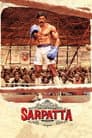
Sarpatta Parambarai (2021)
Pa. Ranjith's Tamil boxing drama is the most direct thematic companion to Peddi on this list.
Sarpatta Parambarai is not a film about boxing. It is a film about what boxing means to a community in 1970s Chennai — about clan pride, identity, social respect, and what it costs to fight for all of it. Kabilan does not put on the gloves just to win a match. He does it because his community's honour is on the line. The sport is the vehicle. The stakes are entirely human.
This is exactly what Peddi does. If the sports-drama flavour of Peddi stayed with you — the weight of representing something larger than yourself, the way victory and defeat carry community meaning — Sarpatta Parambarai takes that same feeling and sustains it for three hours. It is grounded, physical, and emotionally precise.
Best for: Anyone who wants to continue in the sport-as-identity, sport-as-dignity space after Peddi.
Watch it after Peddi if: The community-and-sport angle hit you hardest and you want more of it at full intensity.
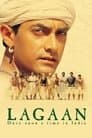
Lagaan: Once Upon a Time in India (2001)
The all-time Indian benchmark for exactly what Peddi is doing.
Lagaan is not a cricket film. It is a film about a village that picks up a sport it barely knows in order to fight the people who are crushing it. The community becomes a single character — every person's small contribution adds up to something that no individual could carry alone. Ashutosh Gowariker builds to a finale that earns every minute of its runtime.
Peddi and Lagaan are separated by twenty-five years and very different worlds, but they are asking the same question: what does it feel like when ordinary people refuse to accept what is being done to them, and choose to fight back on a field? Lagaan answers that question at a scale that Indian cinema has never quite matched since.
Best for: The film you watch when Peddi has left you in that underdog-sports-emotion headspace and you want to see it at its absolute peak.
Watch it after Peddi if: You want to experience the same spirit at all-time Indian cinema level.
The Short Answer
| Timing | Film | Why |
|---|---|---|
| Before Peddi | Rangasthalam | Ram Charan's rural intensity and emotional range |
| Before Peddi | Uppena | Buchi Babu Sana's directorial grammar |
| After Peddi | Sarpatta Parambarai | Sport as identity, community, and dignity — Tamil cinema's best |
| After Peddi | Lagaan | The all-time Indian benchmark for village sport and collective pride |
Related Watchaao Guides
- 7 Movies to Watch When You Cannot Decide — a different kind of list for a different kind of evening.










Community
Join the conversation
Native comments are planned for watchaao. For now, send your thoughts through the upcoming community channels.