
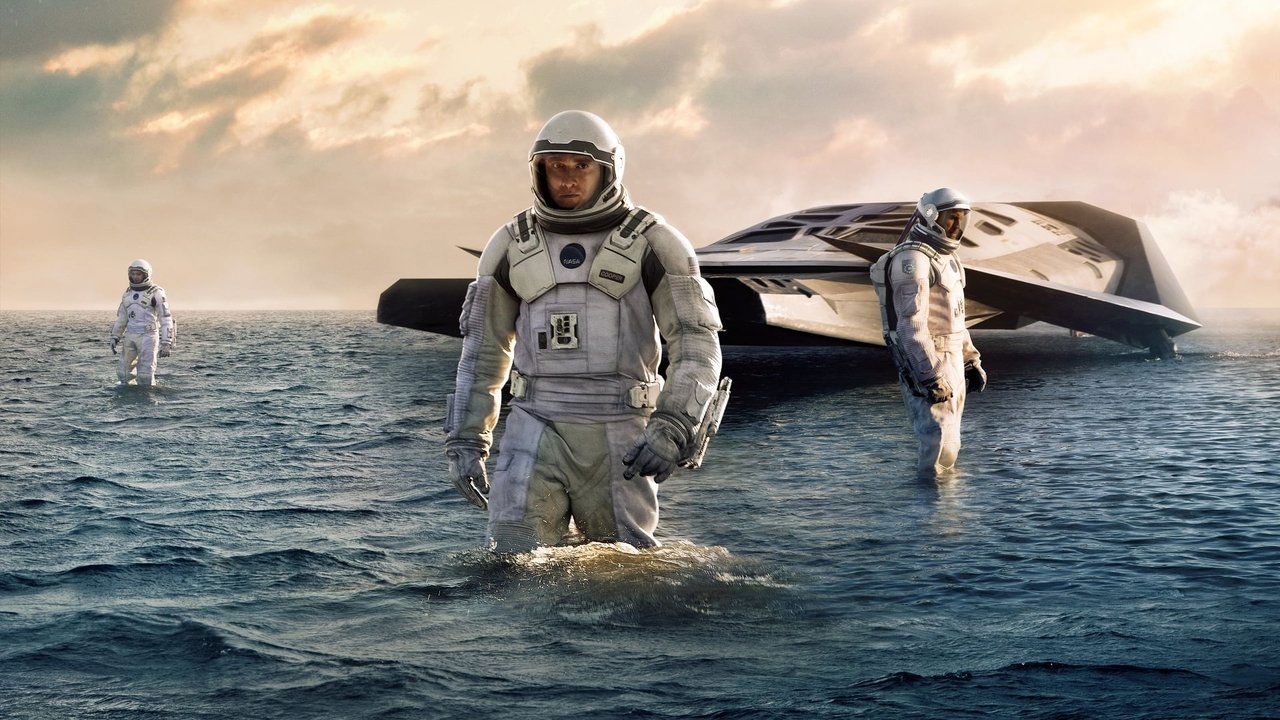
Interstellar was released in November 2014. It has never left the conversation.
That is unusual. Most blockbusters — even the best ones — have a conversation window of six to twelve months. They are discussed, debated, and then archived. Interstellar keeps coming back. It is referenced in discussions of time, climate, fatherhood, sacrifice, and the nature of love as a physical force. It is rewatched more than almost any film of its era. It is, by any measure, culturally persistent in a way its contemporaries are not.
The question worth asking is: why?
What Interstellar Gets Right About Time
The film's central scientific conceit — that time passes at different rates depending on proximity to a gravitational source — is grounded in real physics. The wave planet sequence, where one hour on the surface costs twenty-three years on the ship in orbit, is one of the most emotionally precise uses of a scientific concept in blockbuster cinema.
What Nolan understood is that relativity is not interesting as a scientific curiosity. It is interesting as a delivery mechanism for a specific kind of grief: the grief of watching time pass for someone you love while you remain unchanged, or the reverse — returning to find that the person you left has aged beyond what you prepared yourself for.
Cooper's video messages from Murph are not a plot device. They are the film's emotional core. The moment Cooper watches his daughter age in real time, then receives no more messages, and then breaks down in a corridor — that scene is not about space. It is about every parent who has watched their child grow up and understood, in a way they could not articulate, that they were losing them to time.
What It Gets Right About Leaving
Interstellar is fundamentally a film about a parent leaving. Not abandoning — leaving for something that might mean their child survives, under conditions where staying means everyone dies anyway.
The argument Cooper makes to Murph — that he has to go, that the mission matters more than his presence, that she will understand later — is the argument every parent makes when they prioritise something over their child. Career. Ambition. Ideology. Survival. The film does not let Cooper off the hook for this. Murph does not let him off the hook. The film's structure means we experience the full emotional cost of that leaving — not Cooper's experience of it, but Murph's.
Jessica Chastain and Ellen Burstyn play Murph at different ages, and between them they give the performance that the film is actually built around. Cooper is the protagonist. Murph is the subject.
The Third Act Problem
The third act is where the film loses some viewers and holds others forever.
The tesseract — the five-dimensional space constructed by future humans that allows Cooper to communicate across time with Murph — is either the film's greatest achievement or its most indulgent moment, depending on your tolerance for Nolan's literalism. He chose to show the mechanics of transcendence rather than suggesting them, and the result is a sequence that is simultaneously visually extraordinary and conceptually on-the-nose.
The argument for this choice: the film has earned its literalism. Two and a half hours of scientific rigour and emotional investment means the resolution needs to be as specific as what preceded it. Vagueness at this point would feel like a betrayal.
The argument against: the bookshelf. Love as a transmissible force across dimensions. Cooper's realisation. It is a film that believes in the power of human connection to transcend physics, and it is not shy about saying so.
Both readings are correct. The film contains both the poem and the equation, and it does not apologise for either.
Why It Keeps Coming Back
Interstellar is relevant in 2026 for the same reasons it was relevant in 2014, amplified.
The film's premise — humanity has exhausted the Earth and must find somewhere else — is no longer speculative. The dust bowls, the crop failures, the sense of something ending — these are increasingly lived experiences rather than narrative devices. The film's emotional resonance with the present is not a coincidence of timing. Nolan made a film about what it feels like to be alive at a moment of irreversible change, and that feeling has not diminished.
More importantly: the film is about a father and his daughter. It is about the cost of absence and the possibility of return. These are not science-fiction concepts. They are universal conditions that the film addressed with more honesty and scale than most films about families ever manage.
The lasting conversations about Interstellar are rarely about the science. They are about the bedroom scene, the messages, the docking sequence, the final meeting between Cooper and his elderly daughter. The science is the vehicle. The relationship is the destination.
What to Watch Next
If Interstellar is still sitting in your head, the Watchaao guide to Movies Like Interstellar gives you the most direct path forward — films that share its emotional and visual ambitions.
For the space cinema context: Best Space Exploration Movies places it among the films it belongs with.
For the science-fiction context: Best Sci-Fi Movies on OTT extends the catalogue in every direction Interstellar points.
Related Watchaao Collections
- Movies Like Interstellar — where to go next if the film has stayed with you.
- Best Space Exploration Movies — Interstellar in the broader tradition of space cinema.
- Movies You Cannot Stop Thinking About — the films that share Interstellar's quality of staying.






Community
Join the conversation
Native comments are planned for watchaao. For now, send your thoughts through the upcoming community channels.