
A trailer is not a miniature version of a movie. It is a sales argument.
That is why trailers so often mislead viewers. They compress tone, exaggerate genre, hide structure, and make unusual films look more familiar than they are. Sometimes this helps a film find an audience. Sometimes it creates the wrong audience.
Trailers Sell Certainty
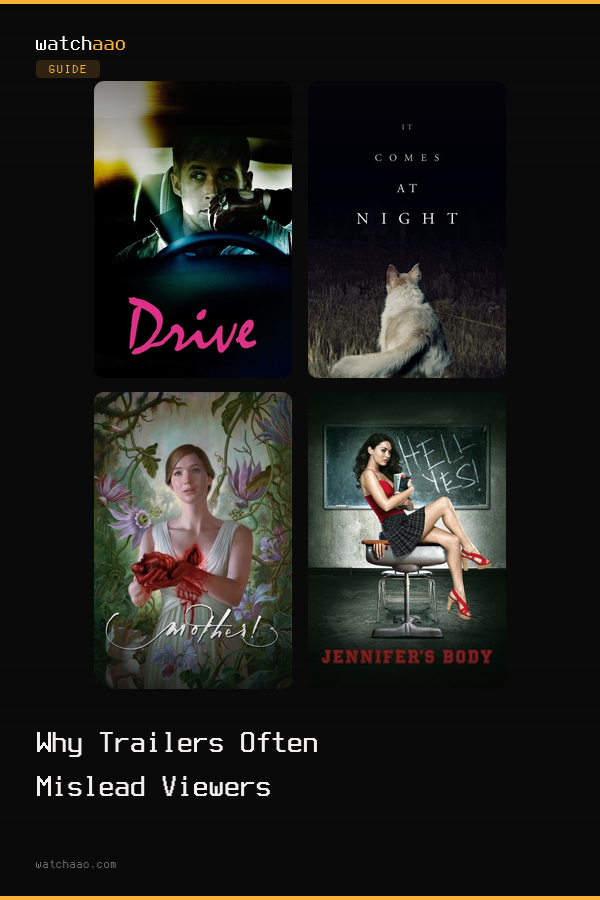
Most films are more complicated than their marketing. Drive is not only an action film. Hereditary is not only a conventional horror film. It Comes at Night is not the creature feature some viewers expected. Jennifer's Body was sold to the wrong audience for years.
The trailer's job is to remove ambiguity. The film's job may be to preserve it.
That conflict creates disappointment even when the film itself is good. The viewer did not dislike the movie. The viewer disliked the gap between promise and experience.
Marketing Chooses the Loudest Element
If a film contains action, the trailer emphasizes action. If it contains horror, the trailer emphasizes scares. If it contains a star, the trailer emphasizes the star.
But a movie's loudest element is not always its central element. mother! is not best understood as a standard horror film. Drive is not best understood as a chase movie. Hereditary is as much about grief and family collapse as it is about fear.
When trailers select the easiest selling point, they can bury the actual reason the film matters.
The Algorithm Makes It Worse
Streaming thumbnails now do part of the trailer's job. They repackage films into the category most likely to get a click. That means a slow-burn drama may appear as a thriller, a satire may look like a romance, and a strange film may be flattened into a familiar genre.
This is efficient marketing, but it is poor guidance.
The viewer does not need the most clickable version of a film. The viewer needs the most honest version of the watch experience.
Better Questions Before Pressing Play
Instead of asking whether the trailer looked exciting, ask:
Does the film seem driven by plot, mood, character, or idea? Is it selling tension or action? Is it asking for patience? Is the trailer hiding the film's actual tone because that tone is hard to market?
These questions make disappointment less likely.
Watchaao Rule
Use trailers for texture, not truth.
A good trailer can make you curious. A good recommendation tells you what kind of film you are actually choosing.
Related Watchaao Collections
- Why Slow-Burn Thrillers Are Not Actually Slow - when the trailer undersells patience.
- Movies That Failed at Box Office But Became Cult Classics - films whose marketing or timing did not match their long-term value.
- Movies for People Who Hate Slow Cinema - a guide to films that move with purpose even when they are not loud.


Community
Join the conversation
Native comments are planned for watchaao. For now, send your thoughts through the upcoming community channels.