

Streaming should have made movie choice easier. In theory, the problem of the DVD shelf or TV schedule is gone: more films, more languages, more genres, more ways to search.
In practice, OTT often makes choosing harder. The problem is no longer scarcity. The problem is too many almost-right options.
More Choice Does Not Mean Better Choice
When a platform shows you hundreds of films, it feels generous. But the viewer is not choosing from hundreds of films. The viewer is choosing one film for one specific night.
That changes the question. You are not asking, "what is the best movie here?" You are asking, "what is the right movie for my current energy, company, time limit, language preference, and patience level?"
Most streaming interfaces are not built around that decision. They are built around rows: trending, new, popular, because you watched, top 10, leaving soon, critically acclaimed. These rows create motion, but they do not necessarily create clarity.
Algorithms Know Behavior, Not Mood
Recommendation engines are good at detecting patterns. If you watch crime thrillers, they will show you more crime thrillers. If you stop on Korean titles, they will show you more Korean titles.
But mood is more specific than category. A viewer who liked Knives Out may want another clever mystery, or they may want something lighter, or they may only want a film that is safe to watch with family. Those are different needs.
This is where human curation still matters. A good recommendation explains the watch condition, not just the genre match.
The Thumbnail Problem
Streaming apps often reduce films to images and short labels. A serious drama can look like a generic romance. A sharp comedy can look disposable. A slow-burn thriller can look like a conventional crime film.
That means viewers are constantly making decisions with insufficient context. They scroll past excellent films because the platform has not explained why the film is worth the time.
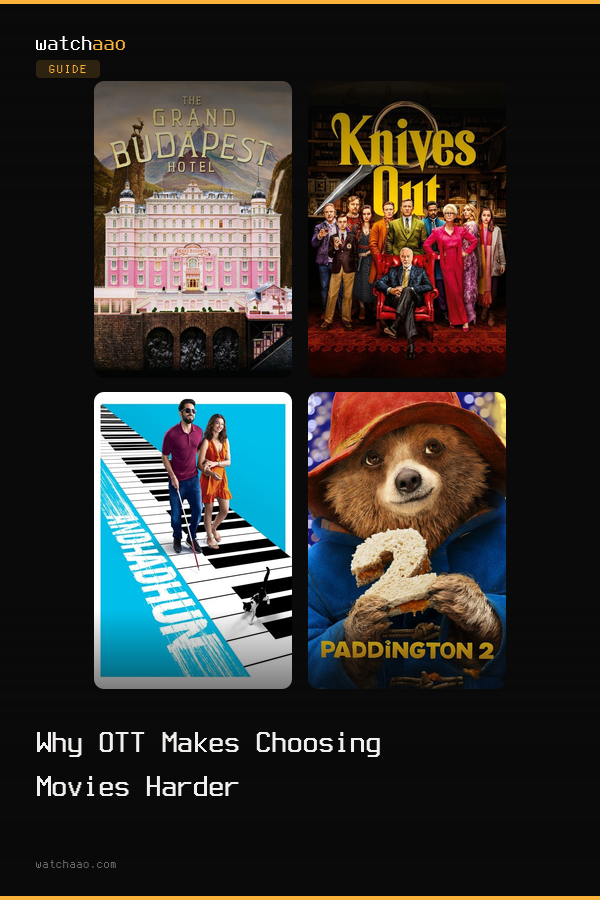
The Grand Budapest Hotel, Andhadhun, Paddington 2, and Spotlight are completely different watch experiences. A good guide separates those experiences quickly. A platform row often makes them all look like tiles.
Why Lists Help
A useful watchlist is not just a list of good films. It is a decision tool.
It says: choose this if you want something light but well-made. Choose this if you want a mystery without gore. Choose this if you want a serious film that still moves fast. Choose this if you are watching with people who do not agree on taste.
That is the gap Watchaao tries to fill. We are not replacing streaming platforms. We are giving the viewer a reason to press play.
Watchaao Rule
OTT makes choosing harder because it gives you discovery without decision logic.
The fix is not another endless row. The fix is a shorter list with clearer reasons.
Related Watchaao Collections
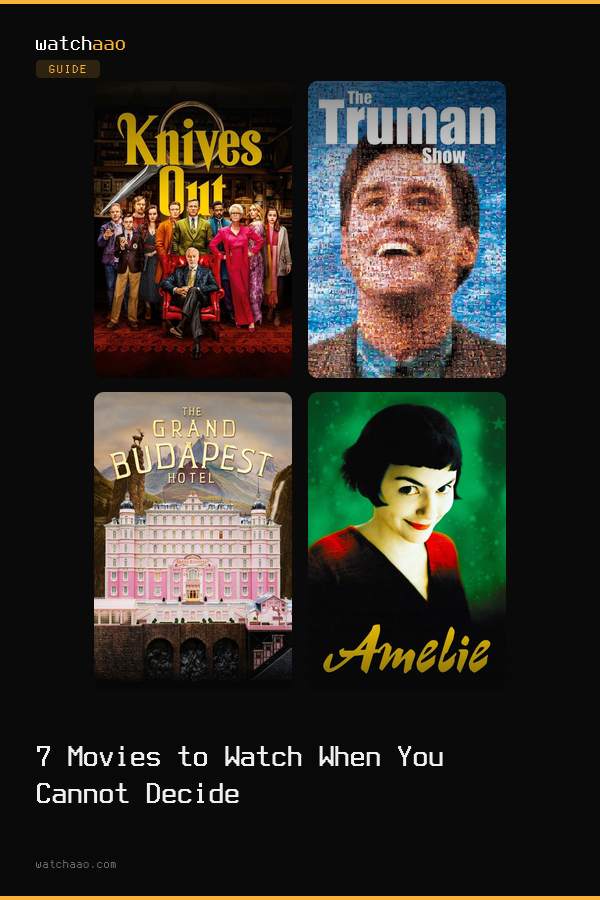
- 7 Movies to Watch When You Cannot Decide - the emergency version of this problem.
- Movies for People Who Usually Keep Scrolling OTT Apps - practical picks for decision fatigue.
- OTT Watchlist for People Tired of Algorithm Recommendations - a human-curated alternative.




Community
Join the conversation
Native comments are planned for watchaao. For now, send your thoughts through the upcoming community channels.